A blog for the Spring 2015 session of Architecture 199 KH -- Architecture and the Built Environment
Thursday, April 9, 2015
On the Road
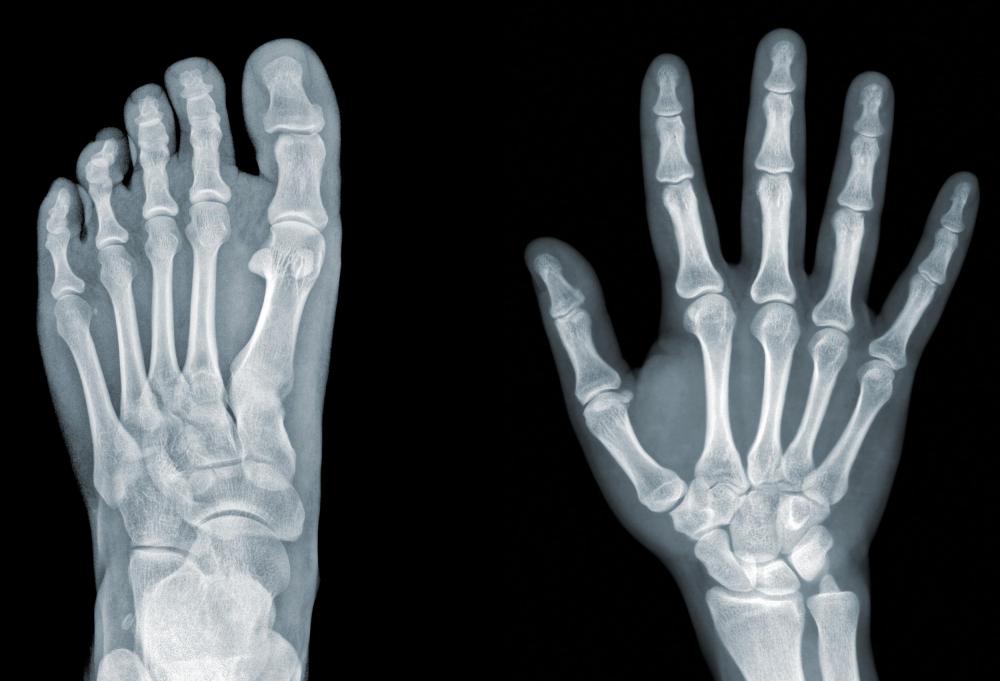
This picture is strange. You probably look at people all the time, but unless you're Superman, this isn't what you see. You see hands and feet, clothes and a head. You see skin, you see hair. You don't see bones, or tendons, or internal organs. You don't really know much about the interior structure of a person, the way all their parts link up and do what they do. What happens in the shoulder of a professional baseball pitcher throwing a curveball? What happens in the knees of a college football player landing from a huge leap to catch a high ball? You can see the effects of what happens; the pitcher throws a strike, the receiver scores a touchdown. But you have no clue what happened behind the scenes to allow that to occur.
Like people, the only time after a building's construction that you get to see its internal workings is when something goes wrong. Don't look up "Kevin Ware Injury" unless you're sure you can handle it. Similarly, you don't see what's inside the structure of a building until somebody punches a hole in the wall. And even then, your view is very limited.
Unless, of course, you step into a building while it is still being built. It's an entirely eerie process. You can see where things will go, the beginnings of the aesthetics of the building. Here, there'll be this grand, flowing wall. There, there'll be a kitchen, and there'll be students learning to cook again now that they lost parts of themselves in the war. Up here, we'll have rooms where residents will be able to get everywhere, even the bathroom, without worrying about how their body will be able to get them there.
But none of it is there yet. You can only see the stubs of what will be, the edifices in the structure devoted to this or that. In places, there are pipes and mechanical systems that you would never get to see otherwise. There are no doors or windows internally, only holes in the walls connecting space to space. You're partway in between the conception of the idea and its actual realization, and it shows.
There's something marvelous about the process of seeing idea from start to finish. How can one start from nothing to find an idea? How can you turn the idea to a plan for construction? How can you get the idea to actually happen through all the mishaps and impossibilities that arise as construction takes place? To create, you have to be able to adapt.
Monday, April 6, 2015
Speaker for the Dead
In American culture, we don't really like to talk about death. It's just off-limits. Many other aspects from birth to before death are okay, but the end and its beyond go largely unspoken outside of Sunday sermon. It's some wonder, then, that the cemetery was once the place to go for a pleasant day out. Now, it's the edge of town, or the black hole in the middle that you drive by without noticing, pushed out of sight and forgotten.
Not perfectly forgotten, of course. For those who have loved ones interred there, the graphic image of grandpa lying in the ground is hard to push from your mind. In some cultures, people will bring images of life, flowers and other pretty objects to the tombstone to show that life goes on. In others, people bring stones, to rest on the tomb, and as more and more people come the pile of rocks grows taller and taller.
But when nobody you know is actually buried there, how often do you think of a cemetery? There's one at the edge of my neighborhood. I drive past it every time I go home; for 17 years of my life, I passed it nearly every day. I don't know the least about the place, other than the fact that it's there. I don't know who rests there, or anything about their families. I hardly see the tombstones anymore as I drive past.
But walking around that cemetery still got to me. Having lived here for some time, in the first half of our walk I recognized some names, mostly mere local celebrities. Perhaps the name of a family I knew but didn't much care for. But, it wasn't until I saw the great- or great-great-grandparents of my closest childhood friend that I realized what the cemetery was.
The cemetery stands as more than a repository to store the dead. There is a utility beyond the final placement of persons no longer living. It is a place of stories. Memories tangled up in all sorts of things in the brain come unlocked, walking past the names of people you knew. The physical action of going to the cemetery, on the edge of town or the black hole in the middle, awakens you to the thought that today, something different is going to happen. I didn't know Earle and Bessie Dragoo, and neither did my friend (they died some twenty-five and thirty-five years before he was born). But seeing even the name reminded me of him in a powerful way, and that maybe I ought to try to talk to him again soon. Such is the power of the cemetery, not in holding the remains of the dead, but in unraveling the thoughts of the living.
Subscribe to:
Comments (Atom)


