Monday, May 11, 2015

Moriana, Gleaming Bright / Moriana, Gloomy Night

WELCOME TO MORIANA
POPULATION: HALF WHAT YOU THINK


IMG_4911.JPG
Fig. 1 Mark fondly ponders creation
IMG_4914.JPG
Fig. 2 Moriana under construction

“When you have forded the river, when you have crossed the mountain pass, you suddenly find before you the city of Moriana, its alabaster gates transparent in the sunlight, its coral columns supporting pediments encrusted with serpentine, its villas all of glass like aquariums where the shadows of dancing girls with silvery scales swim beneath the medusa-shaped chandeliers. [...]”


What is Disneyland, or Disney World, to a kid? Consider Disneyland’s dedication, by Walt Disney, in July of 1955:
To all who come to this happy place: Welcome. Disneyland is your land. Here age relives fond memories of the past, and here youth may savor the challenge and promise of the future. Disneyland is dedicated to the ideals, the dreams, and the hard facts that have created America, with the hope that it will be a source of joy and inspiration to all the world.
Age relives fond memories of the past. Youth savors the challenge and promise of the future. The park is dedicated to the reconstruction of the world surrounding it. But that’s not quite correct! It is dedicated to life, but only the highlights. Age doesn’t relive the death of its father. Youth doesn’t savor the hardships of the future. The park is perfection crystallized, life idealized, the world as we wish it to be. Beauty, without the ugly mar of what holds it up.

FullSizeRender.jpg
Fig. 3 Moriana's seedy underbelly
“[...] If this is not your first journey, you already know that cities like this have an obverse: you have only to walk in a semicircle and you will come into view of Moriana’s hidden face, an expanse of rusting sheet metal, sackcloth, planks bristling with spikes, pipes black with soot, piles of tins, blind walls with fading signs, frames of staved-in straw chairs, ropes good only for hanging oneself from a rotten beam.”


But how can the Disney parks physically prop up such beauty? Surely if we had the technology to make life as we wish it, we wouldn’t reserve it for these two pockets of the world. The truth is, everything in the park is manufactured. It is a trick of the perspective, a deception of the eye, a falsification of the world it supposedly recreates. It is a simulacrum, a superficial imitation. There is no real, identifiable place it represents, and yet it represents… the world, somehow. Nothing in it is real. Consider Phillip K. Dick’s fantasies of altering it in “How to Build a Universe” (quoted, Liminality in Fantastic Fiction: A Poststructuralist Approach, Sandor Klapcsik):
In my writing, I got so interest in fakes that I finally came up with the concept of fake fakes. For example, in Disneyland there are fake birds worked by electric motors which emit caws and shrieks as you pass by them. Suppose some night all of us sneaked into the park with real birds and substituted them for the artificial ones. Imagine the horror the Disneyland officials would feel when they discovered the cruel hoax. Real birds! And perhaps someday even real hippos and lions. Consternation. The park being cunningly transmuted from the unreal to the real, by sinister forces.
Disneyland is completely constructed; Main Street, USA is perfectly designed so that, from street level, one doesn’t realize that there is no difference between buildings from facade to facade, and all the facades do is hide the massive conglomerate beyond. Real birds poop and fly in peoples faces. Real hippos need to be cared for. Real lions eat other real animals. These are not ideal. These are not the world we want to see. These are not what we thought we wished for.


IMG_9094.JPG
Fig. 4 Moriana in demolition
“From one part to the other, the city seems to continue, in perspective, multiplying its repertory of images: but instead it has no thickness, it consists only of a face and an obverse, like a sheet of paper, with a figure on either side, which can neither be separated nor look at each other.”

What does a California theme park have any to do with Calvino’s 1972 Invisible Cities? Consider these last few lines of the story of Moriana in the context of, in particular, Main Street, USA. “From one part to the other, the city seems to continue, in perspective, multiplying its repertory of images.” From street level, you can see only the facades of buildings, that seem to stretch on for ages and ages. “But instead it has no thickness, it consists only of a face and an obverse, like a sheet of paper, with a figure on either side, which can neither be separated nor look at each other.” Disneyland exists as the union of two worlds: the world of the guests and patrons of the park who stroll through, and the world of the imagineers and employees who make the park run. As a guest, you’ll never see the underground tunnels that connect everything but for extreme emergency; you’ll never see the room where Mickey gets to take off his head. And as an employee, your diversions into the world of the guests are brief and fleeting; and when in your own world, you are completely divested. And yet, neither could still stand without the other. Disneyland is, in a sense, just like Moriana.


IMG_4915.JPG
Fig. 5 Close-up of a glass house
So, how does one depict Moriana? Knowing this about Disneyland gave us a powerful guide already in place. We needed to depict two worlds: the world of the front of the city, beautiful and gleaming; and the world of the back of the city, where its true nature, hollow and put upon, is revealed. A billboard skyline, constructed of graham crackers held up with pretzel rods, form the facade of the city, hiding its back. Mountains and grassy land frame the city, the stage upon which we tell the story of this life. Downstage, there are beautiful glass (jolly rancher) houses and pediments and everything else, while upstage we transition from glass and transparency to graham cracker and opaquity. By giving some measure of transparency up front, we further hid the fact that there was anything to hide. Behind the graham crackers, was death and sadness and gnashing of teeth. There were the supports of the city, and the things it did not let become obvious. What actually held up the city as opposed to what the city aspired to be.


FullSizeRender (1).jpg
Fig. 6 Moriana being eaten
It's a warm April day and the sun is gleaming off of the icy blue water. You have just gotten off the ferry boat taking you to Moriana. You have never seen this city before, only in pictures from the travel brochures. The scene in front of you is almost surreal. You pass by the meadow and look up to the mountains in the distance, perfectly framing the colorful skyline peeking out above the nearly cloudless sky. As you approach the city, you walk up to the beautiful spiral columns inviting you in. The homes you see are fantastically colorful, yet translucent. You wonder if they are even sturdy enough to live in, or if they are simply for show. Either way, they are unlike anything you have ever witnessed. You wander down a road, to come to more buildings, somewhat translucent, somewhat more solid. Finally, you reach the skyline, as tall and colorful as can be. You try and enter, but the doors are stuck in place. Your curious spirit leads you to go investigate. You head back out of the spiral archway, through the meadow, and find a small tunnel leading you through the mountain pass. You come to find the back of the city, and you cannot believe your eyes. It can't be so. The once beautiful scene has turned decrepit and run-down. The buildings are more like broken shards and there is dirt and soot up to your knees. The magnificent skyline is being held up by splintered rods. The beautiful city you had always dreamed of visiting is merely a facade.


To demonstrate Moriana to the class, we led them to eat the city from front to back. Although there proved to be altogether too much food, the intention was that, as they worked their way backwards, they came to see more and more of the supports and hidden face, until they busted past the graham cracker skyline and revealed it in its entirety. The action of eating was the revelation of the story as it was encoded in the cake itself, alabaster gates transparent in the sunlight to the front hiding an expanse of rusting sheet metal and more to the back. A simulacrum of a perfect life in the city laid bare.


IMG_4913.JPG
Fig. 7 Moriana's foundation, after day 1 of construction
Reflection 

We built our edible (and very delicious) rendition of the city of Moriana out of chocolate cake, frosting, melted chocolate, ice cream cones, coconut shavings, pretzels, jolly ranchers, wafers, graham crackers, dots candy, rope candy, pirouette cookies, sprinkles, icing, and animal crackers. The city’s base was a two tiered cake, surrounded by ice cream cone mountains and a gatorade river (not pictured). Just like the city described in Italo Calvino’s Invisible Cities, our semicircular city had mountains, a river, spiral columns, a serpentine pediment, and “glass” houses. According to Calvino, “it consists of only a face and an obverse, like a sheet of paper.” We depicted this by creating a skyline facade of 2-dimensional buildings. From a far away perspective, you cannot tell that the city does not continue on. The back of the facade portrays the “hidden face” of Moriana, consisting of rotting beams, ropes, soot, and spikes. To portray this unique aspect of the city, we imagined with guided imagery that we had never seen a city with an obverse like Moriana, and it was our first time discovering this truth.

Overall, this project was a great way to get to know our classmates, as well as to understand the book and the concepts behind creating and modeling our own built environments. It was fun to put our own creative spin on someone else’s imagined city. It was also enjoyable to bake and eat! Not only does architecture, or architecture modeled from sweets, have to come together to make a form that makes sense, but it also has to have a story or purpose, and we feel as though this class has really emphasized that. We also learned the value of giving and taking criticism, because all feedback helps challenge us to create the best projects we can through an iterative process.

Tuesday, May 5, 2015

Center of the Universe

"A friendly desert community where the sun is hot, the moon is beautiful, and mysterious lights pass overhead while we all pretend to sleep. Welcome... to Night Vale." -- Welcome to Night Vale, "Pilot"

You stand in the center of the universe. In all directions around you, life is happening, whirling, revolving around you and your position. It speeds up, slows down, spirals around and around. Things will come and things will go. But, for this moment, while you stand here, in the center of the universe, everything surrounds you.

Welcome to small town Americana. No matter what state you're in, what county, by entering this small town you have entered a new universe. It's a foreign one to many; the kind of thing a suburban kid reads about in books and sees in movies at best. But while inside, there is much to observe, to bring back to the waiting world outside.

How do small towns happen? Why? The answer is, largely, they don't anymore. Say it as a good thing or a bad thing, but small town Americana is dying out. People frequently don't want to live in the small towns, where opportunities are limited and excitement is rare to be found. Those who grew up in them stay, yes, but they also leave. Slowly, small towns are withering away, atrophying as the young decide to head on to new experiences.

To properly answer the question, of course, is to look at history. America was a country founded step by western step. When an area became too crowded, or didn't afford enough opportunity for folk, they moved, and the only place open was the west. So, settlers from, say, what is now Ohio would group together, travel west until they found unclaimed land, and developed it. They farmed, at first, and around these farmers grew a community. Nowadays we see it with the grain elevator central to many small towns in Illinois, and the banks and post offices and such that line Main Streets. But this community grew, more farmers and support were raised, and so on. Until a certain point, when the land was all claimed up, the farms didn't need more workers for the tractors and things it had, and the limited options of employment as "farmer support" dried up. So, people left the small towns to work in factories and such in the urban areas. Such is the history of our country.

But what exactly is a small town? Or, more precisely, why is Philo the center of the universe? The answer is simple: to these farmers, and the community around them, this town, with the grain elevator and the banks and the Philo Tap and whatever else, is the hub of all that they do. Back in the day, there were things like the Sears Roebuck catalog that brought in outside items. But, other than these limited resources, towns largely had what they had and not too much else. Everything in their little universe came in and out of that town. What else could it be but the center?

Small towns are a weird beast. Like an endangered species, they are slowly fading away. Unlike the photogenic endangered species, however, there is less of a push to save them. Whether this is a good thing or not is dependent on the individual, and frequently their own desires on how they want their life to be. But, whether you want a fast-paced, exciting life, or you want a simple, slow one, take a stop to appreciate ways different than your own. You never know when you'll find the best fish fry of your life.


Walking Among Giants

In it's very name, it's symbolic of why we are here. "Education." It seems simple, obvious, but too often it's lost on us. That's the reason why people go to college, theoretically. To gain an education, for whatever particular purpose it may serve us.

Education Building, main entrance.
At first glance, Education Building is an odd duckling. It's a brick wearing a sombrero, it's got a pit on one side and a garden on the other. It isn't immediately obvious what it is trying to accomplish, if you don't know what you're looking for.

Parthenon, Athens, Greece.
Once you do, though, the familial resemblances begin to sink in. "Good artists copy, great artists steal," right? And you may begin to see how Education Building was, at least at the beginning, trying to copy the Parthenon. All grand art calls back upon its predecessors, frequently going back to, in the most common memory the Greeks. And so it is with this building, but instead of being so old that it is barely still standing, we have a few modifications. A revitalization, if you will.

The main lobby inside of Education Building.
Colorful art, reminiscent of a child's drawing, adorns the walls inside. Wood paneling and concrete construction along with some... peculiar interior decoration choices lead to the place feeling like it was modeled after the ISIS office in Archer.

Garden side of Education Building
Heading back outside, we can see where the columns would go if this were a more true to form copy of the Parthenon. In the picture above, we get to walk amidst a beautiful garden as we admire(?) the building. A few benches line the "sea" of pebbles and exposed concrete that line around the temple itself.

The third floor roof terrace, accessible from the offices there.
The view of TBH from the Education Building roof.
Going back in, pestering one of the faculty, and navigating out to the roof, we get an entirely new side of the building. This isn't something you'd be able to walk around in Athens; we're on the roof. We can look around and see the buildings all around us. It's windy up here; the height above the trees means the wind doesn't get blocked off so much. It's really an exhilarating feeling to be on the roof of a building, that should definitely be attempted and done as frequently as possible.

This is an unusual post for me, admittedly. I think, in a way, it reflects some of the unusuality of rerecognizing an old building as something you'd never seen before. Or, more generally, seeing something in a new way for the first time. You get to rediscover something you thought you already knew, and it's fascinating to realize why things you thought were weird or bad are the way they are. Interesting, at the very least. And an interesting way to get some knowledge of a design I have only limited knowledge of on my own.

Things Not Seen

Buildings are, in a lot of ways, designed to hide things. Inside of a building, you're hidden from the elements, safe and warm and dry. They hide the mechanical systems that keep you safe and comfortable, they hide the electrical systems that let you work into the night and power up your computer, they hide the structural systems that hold everything up. At least, from normal users; maintenance needs access to the mechanical systems if something breaks down, the electrician has to be able to get to the electricals if the power goes out, and occasionally structure is part of a design. But, generally, buildings hide these things away.

They don't just hide these physical structures, though. In much the same way buildings hide you from the outside, they hide the things that are serving you once inside from you. Yes, that means the electrical and mechanical and whatever else systems, but there's more to it than just that. Take, for example, the humble library.

Well... This one's not so humble. Staircase leading up to information desk and reading room of Main Library.
The library provides any number of services; a place to study, computers to use free of charge, occasionally a cafe. But, most importantly, it serves you books. And CDs and DVDs and Microfilms and yadda yadda yadda, but let's just focus on books for now.

Reading room of Main Library. A very quiet place to study, if that's what you want.
When we look only at the main spaces, the reading rooms and information desks and whatever elses of the library, we see grandiose spaces. The reason the reading room of the Main Library is so popular to study is how quiet it is, which it achieves by scaring students into submission with how loudly even the slightest actions echo through its chambers. It is so big in order to give a sense of the grandiose to those who populate it, to impart the huge magnitude of what they are trying to accomplish. Huge windows draw in light from the heavens to shine upon those working there.

Information desk of Main Library.
Cross the hall to the information desk, and it's a similar story. A giant room, a magnificent chandelier in the center, big Tuscan columns lining the room, high sets of windows. You, the user of the library, are trying to accomplish something incredible. The library reflects that. Until you step into space that actually serves the main utility of the library, the stacks serving you books.

Main stacks. Notice that the shelves also form the structure of the building.
Once you step back there, immediately the space crunches down on you. No longer are you in a room that could fit a god; now, instead, we feel nearly claustrophobic from how low the ceiling is. In some parts, relatively tall people have to duck to avoid taking off their heads. The shelves are close together. Books are packed on wherever possible; there are spaces, but they won't last forever. A library has only so much floor space, and it is optimized to the max in the stacks.

The thickness of the floors in the stacks is only what it needs to be to hold up the people walking among them safely.
This space is special for its own purposes, to most effectively get you the books you want. However, it doesn't make you feel special. In most cases, you don't want to go back here unless you need to. You want to work in the grandiose reading room, you want to talk to someone at the information desk who will help you get the book you want without traversing this space. This space is lesser, not worthy of your presence.

Entrance to Smith Memorial Hall
Consider now, instead of the library, a music performance space. Namely, Smith Memorial Hall. Admiring its grand entrance, we see that it is in many ways building up its own grandiose space. The walks between columns form giant entrances fit for the greater gods, then large door spaces for the lessers, and finally the doors themselves inside, for the humans to walk among them.

Main performance hall of Smith, with its organ.
Entering beyond there, the space opens up once again dramatically in the lobby in front of the performance hall. The gods may walk among us yet. And entering, finally, into the performance hall, we see the space open up massively in front of us. A slight incline leads us down to the stage, beyond which a massive organ sits, waiting to be played. The stage itself perfectly frames the organ as decoration, if not instrument, and lends itself as a place upon which music can be played and enjoyed from. The rest of the hall is still grandiose, as well, so that the gods may enjoy our ministrations. A huge room, ornately decorated upon the walls with chandeliers hanging down from the ceiling and beautiful red carpet lining everything. Surely, a stage worthy of being played upon.

Second floor, Smith; not normally accessed by those attending a recital.
However, surrounding the performance hall are spaces for the practicing and teaching of the methods so displayed on this stage. They serve the patrons of the hall the music they want to hear. But, of course, why would the patrons need to see these spaces? And so, they are not so grand, they are not so ornate. They fulfill their purpose, to prepare the music, and no more. Space for the listener and space for the performer, intimately linked, but ultimately apart.

Thursday, April 9, 2015

On the Road


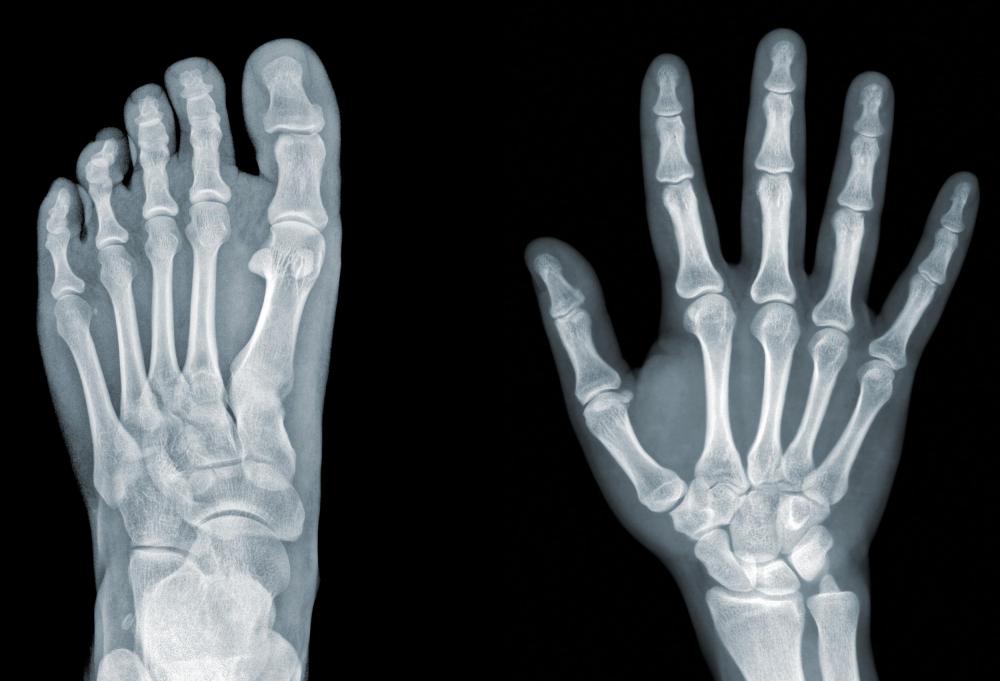
This picture is strange. You probably look at people all the time, but unless you're Superman, this isn't what you see. You see hands and feet, clothes and a head. You see skin, you see hair. You don't see bones, or tendons, or internal organs. You don't really know much about the interior structure of a person, the way all their parts link up and do what they do. What happens in the shoulder of a professional baseball pitcher throwing a curveball? What happens in the knees of a college football player landing from a huge leap to catch a high ball? You can see the effects of what happens; the pitcher throws a strike, the receiver scores a touchdown. But you have no clue what happened behind the scenes to allow that to occur.

Like people, the only time after a building's construction that you get to see its internal workings is when something goes wrong. Don't look up "Kevin Ware Injury" unless you're sure you can handle it. Similarly, you don't see what's inside the structure of a building until somebody punches a hole in the wall. And even then, your view is very limited.

Unless, of course, you step into a building while it is still being built. It's an entirely eerie process. You can see where things will go, the beginnings of the aesthetics of the building. Here, there'll be this grand, flowing wall. There, there'll be a kitchen, and there'll be students learning to cook again now that they lost parts of themselves in the war. Up here, we'll have rooms where residents will be able to get everywhere, even the bathroom, without worrying about how their body will be able to get them there.

But none of it is there yet. You can only see the stubs of what will be, the edifices in the structure devoted to this or that. In places, there are pipes and mechanical systems that you would never get to see otherwise. There are no doors or windows internally, only holes in the walls connecting space to space. You're partway in between the conception of the idea and its actual realization, and it shows.

There's something marvelous about the process of seeing idea from start to finish. How can one start from nothing to find an idea? How can you turn the idea to a plan for construction? How can you get the idea to actually happen through all the mishaps and impossibilities that arise as construction takes place? To create, you have to be able to adapt.

Monday, April 6, 2015

Speaker for the Dead

In American culture, we don't really like to talk about death. It's just off-limits. Many other aspects from birth to before death are okay, but the end and its beyond go largely unspoken outside of Sunday sermon. It's some wonder, then, that the cemetery was once the place to go for a pleasant day out. Now, it's the edge of town, or the black hole in the middle that you drive by without noticing, pushed out of sight and forgotten.


Not perfectly forgotten, of course. For those who have loved ones interred there, the graphic image of grandpa lying in the ground is hard to push from your mind. In some cultures, people will bring images of life, flowers and other pretty objects to the tombstone to show that life goes on. In others, people bring stones, to rest on the tomb, and as more and more people come the pile of rocks grows taller and taller.


But when nobody you know is actually buried there, how often do you think of a cemetery? There's one at the edge of my neighborhood. I drive past it every time I go home; for 17 years of my life, I passed it nearly every day. I don't know the least about the place, other than the fact that it's there. I don't know who rests there, or anything about their families. I hardly see the tombstones anymore as I drive past.


Some names are all but immortal. Zuppke and Huff, for whom "Zuppke Field" (the name of the field at Memorial Stadium) and Huff Hall are named, are buried along the fifty-yard line of the stadium they filled to watch good football (it's too bad we haven't seen much since I have total confidence in Beckman...). But, realistically, the only reason I even know those names is because they're emblazoned on the masonry; Huff's tenure as football coach was over 100 years ago, and his time as AD ended 80 years ago. There's not a whole lot of people still living who were even alive at the same time as him, let alone would remember him.


But walking around that cemetery still got to me. Having lived here for some time, in the first half of our walk I recognized some names, mostly mere local celebrities. Perhaps the name of a family I knew but didn't much care for. But, it wasn't until I saw the great- or great-great-grandparents of my closest childhood friend that I realized what the cemetery was.


The cemetery stands as more than a repository to store the dead. There is a utility beyond the final placement of persons no longer living. It is a place of stories. Memories tangled up in all sorts of things in the brain come unlocked, walking past the names of people you knew. The physical action of going to the cemetery, on the edge of town or the black hole in the middle, awakens you to the thought that today, something different is going to happen. I didn't know Earle and Bessie Dragoo, and neither did my friend (they died some twenty-five and thirty-five years before he was born). But seeing even the name reminded me of him in a powerful way, and that maybe I ought to try to talk to him again soon. Such is the power of the cemetery, not in holding the remains of the dead, but in unraveling the thoughts of the living.

Tuesday, March 24, 2015

Modern Day Palimpsest

A palimpsest (/ˈpælɪmpsɛst/) is a manuscript page, either from a scroll or a book, from which the text has been either scraped or washed off so that the page can be reused, for another document. - Wikipedia

Change is one of few constants in our world. No matter how much we may wish that things will always stay the way they are, just how we like them, they will inevitably change. Imagine your bedroom, the instant after you've cleaned it. In that one moment, things are precisely how they ought to be, and ideally they would always stay that way. But we know they won't; the mound of clothes in the side of the room will inevitably reappear, and your things will slowly, but surely, find their way into odd nooks and crannies about the room. Change is. Change was. Change will ever be.

Long ago, before things upon which one would write were plentiful, the monks (who were predominantly the ones making and keeping books, prior to the printing press) had a problem. Sometimes, as they wrote, they would run out of parchment, with no opportunities to get or make more. And so, in order that they could keep writing, they would take parchments from older works (perhaps less useful ones), scrape off what had been written before, and write anew for what they were then working on. The parchment's use changed; it had been devoted to one set of ideas, and it was rededicated to a new set.

In fact, this notion of overwriting is not terribly uncommon today. Computer memory works similarly; when you delete a file, it typically does not immediately leave your disk. Rather, only when the computer needs the space for a new file will it do anything to the old one. And, we can see it in more physical instances as well. Take, for example, campustown.

Panda Express, previously Follett's Bookstore, marks the main entrance to Campustown and Green Street from the University
Originally full of single-family homes, the area has developed rapidly into a commercial and student-residential zone, with several restaurants, bars, shops and apartment complexes all catering primarily to students. Major changes have also affected the traffic flow through the area to be more pedestrian-friendly (intoxication level notwithstanding) and the design of the facades of the storefronts.

Green Street's main strip, the original storefronts of Campustown
Most of the growth is centered around Green Street, colloquially known as the home to the campus bars (though many lie on side streets next to Green, and others lie merely nearby, like on Daniel Street). New construction always seems to be ongoing on Green Street, with new high rises popping up regularly.

Campustown is quickly growing, looking specifically at the very new high rises in the background. Notice that the closest tower (on the right) lies back from Green Street aways, so as not to give as imposing an impression from street level.
But, with such rapid growth and such limited land resources, something had to give. The change was too rapid. The area became palimpsestic.

Different locations handled the change in different ways. Cly's built a large storefront to hide the fact that they were housed in a particularly large house (which you would never really have a reason to notice, but can be plainly seen even from the Green and Sixth intersection). In other locations, the houses were just ignored; the tower built on top of Gameday Spirit blocks in a house that has no immediately obvious access to any streets. In any case, the buildings were writing over themselves.

Behind this building lies a single-family home, with no easy access to it. Prior to the building of the tower above Gameday Spirit (on the left), this house was visible from Green Street. Now, you would have no way of knowing it was there, but for the space barely visible between the towers on all sides.
In other locations, the changes happened in different time frames and different speeds of growth. All the way down past Fourth Street, two especially tall apartment complexes have been built. However, on the corner of Green and Fifth lies two suburban-model storefronts, one for Pizza Hut (whose tiny parking lot behind the building looks completely laughable) and one for Walgreens (Walgreens doesn't look quite as out of place, but the lack of eye-level windows does spark a noticeable difference). The Fifth Street developments took place before those at Fourth Street, at a time when merely building a store was a significant development in and of itself. Now, developers have their sights set on higher goals.

In the background, we can see more high rises, while in the foreground we can see an ill-fitting suburban-model Pizza Hut
But, we can still see the roots of what this area was if we only walk down the alleys. Even down this way at the edges of the development, we still find houses hidden away behind new buildings. In a sense, this new construction always comes with the cost of tearing down what was there before it; we just happen to be so lucky as to see some of the predecessors today in this area.

This house lies roughly 20 yards off of Green Street down an alley. It is surrounded on all sides by more contemporary construction.
The house pictured above and Green Street.
The rapid development of Campustown has its limits, though, as all things do. Most of the current changes are happening on Green Street between Third and Wright, and there are patches with a lot of catching up to do. More development may also branch off of Green Street before it pushes out even further towards Champaign proper. Campustown is growing up in a big way, but it's not sprawling out.

The Red Lion stands at the edge of the current development. Likely, it will remain safe for a while as things between Fourth Street and Sixth Street catch up to each other, but its fate may not be so certain after that.